
Gold and silver prices are expected to remain range-bound this week as investors await crucial US economic data, including the non-farm payrolls report, and further signals from the Federal Reserve regarding its interest rate policy.

India's exports saw a significant increase of 26.12 per cent to USD 43.81 billion in August, leading to a narrowed trade deficit of USD 26.86 billion, driven by strong demand from key global markets and diverse sectors.

The Reserve Bank of India has marginally increased its GDP forecast for the current fiscal to 6.7 per cent while slightly lowering the inflation projection to 5 per cent. The central bank noted that while domestic economic activity shows resilience, global turbulence, particularly re-escalating conflicts and volatile oil prices, continues to pose risks to the inflation outlook.

NITI Aayog has called for a fundamental overhaul of urban governance in India, advocating for empowered city governments, directly elected mayors with five-year terms, and greater financial autonomy for urban local bodies to manage the country's rapidly growing urban population.

The US midterm elections saw the Democratic Party gain control of Congress and key gubernatorial posts, leading international affairs experts to view the outcome as a referendum on President Donald Trump's policies. Analysts suggest the results signal a desire for change in his behaviour and could prompt a more pragmatic approach in his remaining term, with potential implications for global politics and India-US relations.

Domestic passenger vehicle dispatches in India increased by 21.8 per cent year-on-year to 4,54,574 units in September, while two-wheeler sales rose 13.5 per cent to 24.63 lakh units, according to SIAM data.

BRICS members have expressed 'serious concerns' over the unilateral imposition of trade and finance-related measures, including higher tariffs and non-tariff barriers, stating these actions distort trade and are inconsistent with WTO rules. The grouping also highlighted elevated risks to the global economic outlook due to geopolitical tensions, trade fragmentation, and protectionism.

India's private sector capital expenditure is projected to reach approximately 3.2 trillion in the financial year 2026-27, up from 2.6 trillion in FY26, according to a Reserve Bank of India bulletin report, indicating sustained confidence despite global uncertainties.

India's economy is projected to lose momentum in the second half of fiscal 2026-27, with tighter financial conditions, elevated energy prices, and broadening inflation pressures posing significant risks, according to DBS Bank economist Radhika Rao.

India's exports saw a significant 23 per cent increase, reaching USD 44.4 billion in September, while the trade deficit narrowed to USD 30.21 billion, according to recent government data.

Nehru and Patel's differences were real, but so were their mutual respect and trust, notes Aditya Krishna.

Markets will look for clear guidance on how the MPC interprets the uncertainty and what it implies for the future course of monetary policy, points out Rajeswari Sengupta.

The Reserve Bank of India (RBI) has maintained its benchmark policy rate at 5.25 per cent for the fourth consecutive meeting, prioritising clarity on inflation trends, particularly concerning energy costs and geopolitical developments.

Moody's Ratings has sharply increased India's GDP growth forecast for fiscal 2026-27 to 7 per cent, making it the fastest among G20 economies, driven by economic resilience despite the Middle East conflict. However, the agency flagged significant inflation risks stemming from elevated oil prices and potential El Nino disruptions.

Avenue Supermarts (DMart) reported lower-than-expected Q2FY27 performance, with revenue growth of 18.4 per cent year-on-year but visible margin pressure, leading to a 4.5 per cent stock drop. The company faces challenges from lower-margin sales, operating cost pressures, and aggressive store expansion, impacting profitability despite improved same-store sales growth.

India's entry-level passenger vehicle market is experiencing a significant recovery, with mini car wholesales surging 86.3 per cent year-on-year in the first half of FY27, driven by improved affordability and stronger overall demand.

Foreign Portfolio Investors (FPIs) became net sellers in September, withdrawing Rs 35,860 crore from Indian equities due to global uncertainties, high US interest rates, and elevated crude oil prices, with outflows continuing into October.

Indian benchmark indices, Sensex and Nifty, saw early gains driven by lower crude oil prices and buying in Reliance Industries, even as the Reserve Bank of India maintained its benchmark policy rate for the fourth consecutive meeting, reinforcing confidence in the domestic economy.

Finance Minister Pranab Mukherjee on Monday said the medium-term outlook for the economy is bright and presents an excellent opportunity to take the growth process forward.

The Indian corporate sector demonstrated strong credit quality in the first half of FY27, driven by robust balance sheets and healthy liquidity, despite facing risks from elevated crude prices, inflation, and global interest rates.

India's net direct tax collection has surged by 13 per cent to over Rs 12.12 lakh crore by September 17 in the current fiscal year, driven by a significant increase in advance tax payments from corporates, according to CBDT data.

The Indian stock market's trajectory this week will be significantly influenced by crude oil prices, global market trends, and the commencement of the corporate earnings season, with IT major TCS set to announce its June-quarter results on July 9.

Systematic Investment Plan (SIP) returns for smallcap and midcap mutual funds have seen a significant rebound, with average one-year SIP returns now at 19.1 per cent for smallcap funds and 13.5 per cent for midcap funds, according to Value Research data. This recovery is expected to revive momentum in the retail mutual fund industry, which had experienced a moderation in growth indicators.

'I don't really expect the August increase in food prices, which was close to 6 per cent, to persist as we go close to the end of this year.'
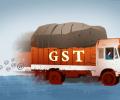
India's Goods and Services Tax (GST) receipts, after accounting for refunds, surged by 18.1 per cent annually to approximately 1.77 trillion in September, marking its fastest growth in six months. This increase was primarily driven by a significant rise in tax revenue from imports, which grew 26 per cent annually.

Indian equities, particularly the Nifty 50, have significantly underperformed their Asian and global counterparts over the past year, with the index down 10.6 per cent. This lag is attributed to factors like rising global oil prices, rupee depreciation, and a lack of participation in the global chipmaker rally that boosted markets like South Korea and Taiwan.
Foreign institutional investors have withdrawn nearly $40 billion from Indian equities in the last two years and, according to Bernstein analysts, have 'little reason' to invest for the long-term, though they may 'return to trade'. The brokerage highlights challenges such as struggling large-caps, disruption from new technologies, and difficulties accessing small- and mid-caps (SMIDs) at an institutional scale.

The advanced economies have been experiencing their longest period of slow growth in many decades.

External Affairs Minister S Jaishankar met US Secretary of State Marco Rubio on the sidelines of the UN General Assembly session in New York. India raised its concerns regarding the recently signed "Lindsey O. Graham Sanctioning Russia and Iran Act of 2026," which authorises tariffs on countries buying Russian oil and gas. Both leaders also discussed bilateral relations, regional priorities, and the situations in the Gulf and Ukraine.

India's student housing shortage is widening, but high land costs, weak rental yields and regulatory hurdles are keeping organised developers away.

India's External Affairs Minister S Jaishankar, addressing the UN General Assembly, strongly criticised Pakistan for its support of terrorism, asserting India's right to self-defence and stating that friendship cannot coexist with terrorism. He also highlighted India's global responsibilities, contributions to the Global South, and its stance on reformed multilateralism and AI.

This article details the quarter-century journey of BRICS, from its inception as an economic acronym by a Goldman Sachs economist to its current status as an expanded eleven-member international bloc. It highlights its growth, key historical moments, and the significance of its upcoming summit, particularly with Iran's renewed importance in discussions.

A new EY India report highlights how young professionals, women wealth creators, entrepreneurs, ESOP beneficiaries, and digitally active consumers from Tier-2 and Tier-3 cities are fundamentally changing India's wealth ecosystem. This shift is evidenced by increased participation of young and women investors, a rise in disciplined investing via SIPs, and the crucial role of Digital Public Infrastructure in democratizing access to long-term wealth creation. The report predicts over 100 million new investors by 2035.

India's real estate sector recorded an unprecedented $9.5 billion in capital inflows during Q3 2026, primarily driven by foreign investors' strong interest in data centres, according to a CBRE Group report.

Rising bond yields in the US and other advanced economies are making it increasingly difficult for Indian equities to attract foreign portfolio investors (FPIs), leading to pressure on valuations and potentially lower returns for domestic investors.

After a significant 9.9% depreciation in FY26, the Indian rupee has shown comparative stability in the first half of FY27, depreciating by only 1.1%, attributed to regulatory interventions and measures to attract foreign capital, despite ongoing global pressures from rising crude oil prices and foreign investor outflows.
Fitch Ratings has affirmed India's sovereign credit rating at 'BBB-' with a stable outlook, acknowledging robust growth prospects and strong external finances. However, the agency highlighted concerns over elevated government debt, lagging structural metrics, and potential fiscal spending pressures due to rising youth unemployment.
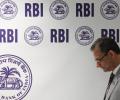
Uncertainties stemming from the West Asia crisis and its potential impact on inflation and economic growth were key factors in the Reserve Bank of India's Monetary Policy Committee (MPC) decision to maintain the status quo on interest rates, according to the recently released MPC meeting minutes.

Analysts predict that developments in the West Asia conflict, crude oil prices, and upcoming US inflation data will be the primary factors influencing the Indian stock market next week, alongside foreign investor activity and global market trends.

India's services sector experienced its weakest growth in four-and-a-half years in July, as new business orders, both domestic and export, eased due to intense competition and declining demand. Despite a modest rebound in job creation and improved profit margins, overall business confidence slipped, reflecting a broader slowdown in the economy.
